Runtime Governance for AI-First Agentic Enterprises
A comprehensive analysis of open-source governance layers for autonomous AI agents across healthcare and enterprise deployments
Executive Summary
TL;DR
A true runtime governance layer for AI-first agentic enterprises now exists: the Microsoft Agent Governance Toolkit (AGT), released April 2026. It is the only open-source project providing deterministic, sub-millisecond policy enforcement across all critical governance functions. However, the ecosystem remains partially fragmented—AGT requires complementary layers like NVIDIA OpenShell for complete coverage, and no healthcare-native runtime governance layer currently exists. Organizations must adapt general-purpose tools for clinical deployments.
Core Finding
Microsoft AGT represents a fundamental architectural breakthrough—the first comprehensive implementation that intercepts, evaluates, and governs every agent action before execution with deterministic, sub-millisecond policy enforcement.
Critical Qualification
Most significantly, no healthcare-native runtime governance layer exists. Organizations deploying clinical AI agents must adapt general-purpose tools with associated implementation burden and regulatory uncertainty.
Prior to AGT's emergence, organizations faced an unacceptable binary choice: deploy autonomous agents without adequate runtime controls, or constrain agent capabilities so severely that autonomy became illusory. The ecosystem was genuinely fragmented across orchestration frameworks (LangChain, AutoGen, CrewAI), security tools (NVIDIA OpenShell, AccuKnox), observability platforms (LangSmith, AgentOps), and compliance documentation systems—none providing unified runtime policy enforcement with cryptographic audit guarantees and regulatory framework mapping.
AGT's significance extends beyond technical capability to strategic positioning. Microsoft explicitly designed AGT for vendor neutrality, with documented integrations for AWS Bedrock, Google ADK, Azure AI, LangChain, CrewAI, AutoGen, OpenAI Agents SDK, LlamaIndex, and "more"—a deliberate architectural choice to establish industry standard rather than proprietary advantage. The toolkit's aspiration for foundation governance signals long-term commitment to ecosystem development.
See the full DeepResearch report here
Direct Match: Microsoft Agent Governance Toolkit
Seven-Package Architecture
-
Agent OS: Policy decisioning and enforcement (<0.1ms p99 latency)
-
Agent Mesh: Cryptographic identity with DIDs and trust scoring
-
Agent Runtime: Execution rings and kill switches for safety
-
Agent SRE: Reliability engineering with SLOs and circuit breakers
-
Agent Compliance: Regulatory mapping (HIPAA, EU AI Act, SOC 2)
-
Agent Marketplace: Supply chain security for plugins
-
Agent Lightning: Training governance for RL workflows
Runtime Enforcement Characteristics
Framework Integration Strategy
AGT's broad framework integration demonstrates vendor-neutral commitment with documented support for LangChain, AutoGen, CrewAI, Google ADK, OpenAI Agents SDK, Azure AI Foundry, LlamaIndex, and Semantic Kernel. The integration pattern varies by framework maturity, with deep integration for native Microsoft frameworks, standard integration through public APIs for third-party frameworks, and managed service integration for platform deployments.
This integration strategy enables organizations to maintain framework agility while implementing consistent governance policies across their entire agent portfolio. The MIT license and foundation governance aspiration signal long-term commitment to ecosystem development rather than proprietary lock-in.
Complementary Layer: NVIDIA OpenShell
Defense-in-Depth Architecture
Microsoft and NVIDIA have explicitly documented complementary integration: AGT provides "governance intelligence" (identity, trust, policy decisions) while OpenShell provides "runtime isolation" (container sandboxing, network egress control). This defense-in-depth architecture indicates that even the most comprehensive governance layer requires complementary components for full-stack protection.
AGT Governance Intelligence
- • Identity verification and trust scoring
- • Dynamic policy decisioning
- • Authority delegation management
- • Audit logging and compliance mapping
- • < 0.1ms evaluation latency
OpenShell Runtime Isolation
- • Container sandboxing with namespaces
- • Filesystem access policies with quotas
- • Network egress control
- • System call restrictions with seccomp-bpf
- • Static policy enforcement
Integration Pattern
The integration pattern follows explicit defense-in-depth principles: AGT evaluates policy at the application layer, making intelligent decisions about who should perform what actions and why, while OpenShell enforces resource constraints at the infrastructure layer, determining where and how those actions can execute.
Example workflow: An agent requests GitHub API POST → AGT evaluates (identity verified, trust score 0.82 > 0.5 threshold, policy permits, authority delegated) → OpenShell evaluates (network policy permits github.com:443, process policy permits curl binary) → Action executes with both layers logging.
This two-layer evaluation ensures comprehensive coverage with clear responsibility separation. AGT's dynamic, context-aware policy evaluation complements OpenShell's static, resource-focused enforcement. Neither layer can be bypassed through the other—AGT policy violation prevents execution regardless of OpenShell permissions; OpenShell resource violation prevents execution regardless of AGT authorization.
Partial Matches: Control Plane Solutions
Galileo Agent Control
Centralized policy layer with "write policies once, enforce everywhere" approach. Released March 11, 2026.
HumanLayer ACP
Kubernetes-native orchestration with human-in-the-loop focus for outer-loop agents.
Nasiko
Developer control plane with orchestration, deployment, and cost monitoring capabilities.
Classification Rationale for Partial Matches
Why Partial Match?
- • Significant governance capabilities but with material gaps
- • Narrow focus on specific governance aspects
- • Lacks comprehensive runtime enforcement
- • Missing critical components like identity or audit
Use Cases
- • Policy centralization requirements (Galileo)
- • Human-in-the-loop focus (HumanLayer)
- • Developer experience emphasis (Nasiko)
- • Complementary to comprehensive governance
Adjacent Tools and Frameworks
Agent Frameworks
- LangGraph: Stateful orchestration with human-in-the-loop nodes
- Semantic Kernel: Enterprise integration with pluggable memory
- AutoGen: Multi-agent conversation patterns
- CrewAI: Role-based orchestration with process patterns
Policy Engines
- OPA: Mature policy evaluation with Rego language
- AccuKnox: Kubernetes-native runtime enforcement
- Protect AI: ML supply chain security and model scanning
- Robust Intelligence: AI risk validation and model testing
Observability
- LangSmith: Agent tracing and evaluation
- AgentOps: Performance monitoring and metrics
- Arize AI: ML observability and drift detection
- Fiddler: Model monitoring and explanation
Healthcare-Specific Adjacent Projects
HAARF: Healthcare AI Agents Regulatory Framework
Most comprehensive regulatory synthesis with explicit limitation: evaluation harness, not runtime layer.
Microsoft Healthcare AI Examples
Research and development focus with explicit disclaimer: not for clinical deployment as-is.
Healthcare Track: Detailed Assessment
Critical Gap: No Healthcare-Native Runtime Governance
The most significant finding: no open-source project provides runtime governance with built-in clinical semantics, EHR integration, FDA-aligned change control, and healthcare organization validation. Organizations must adapt general-purpose tools with associated implementation burden.
Regulatory Landscape
EU AI Act (High-Risk)
Effective August 2026. AGT provides comprehensive mapping for risk management, data governance, documentation, human oversight, and cybersecurity controls.
HIPAA Security Rule
Technical Safeguards mapping for access control, audit control, integrity, authentication, and transmission security.
FDA TPLC/SaMD
Predetermined change control and algorithmic drift monitoring through deterministic policy and SRE practices.
Healthcare Requirements Gap Analysis
Strategic Options for Healthcare Organizations
Adapt AGT
Implement healthcare-specific policy libraries, clinical workflow integration, and validation.
Cons: Highest implementation investment
Await Specialization
Monitor for AGT healthcare specialization or new healthcare-native project.
Cons: Higher timing uncertainty
Hybrid Approach
AGT for core governance, custom implementation for clinical-specific requirements.
Cons: Integration complexity
General Enterprise Track: Assessment
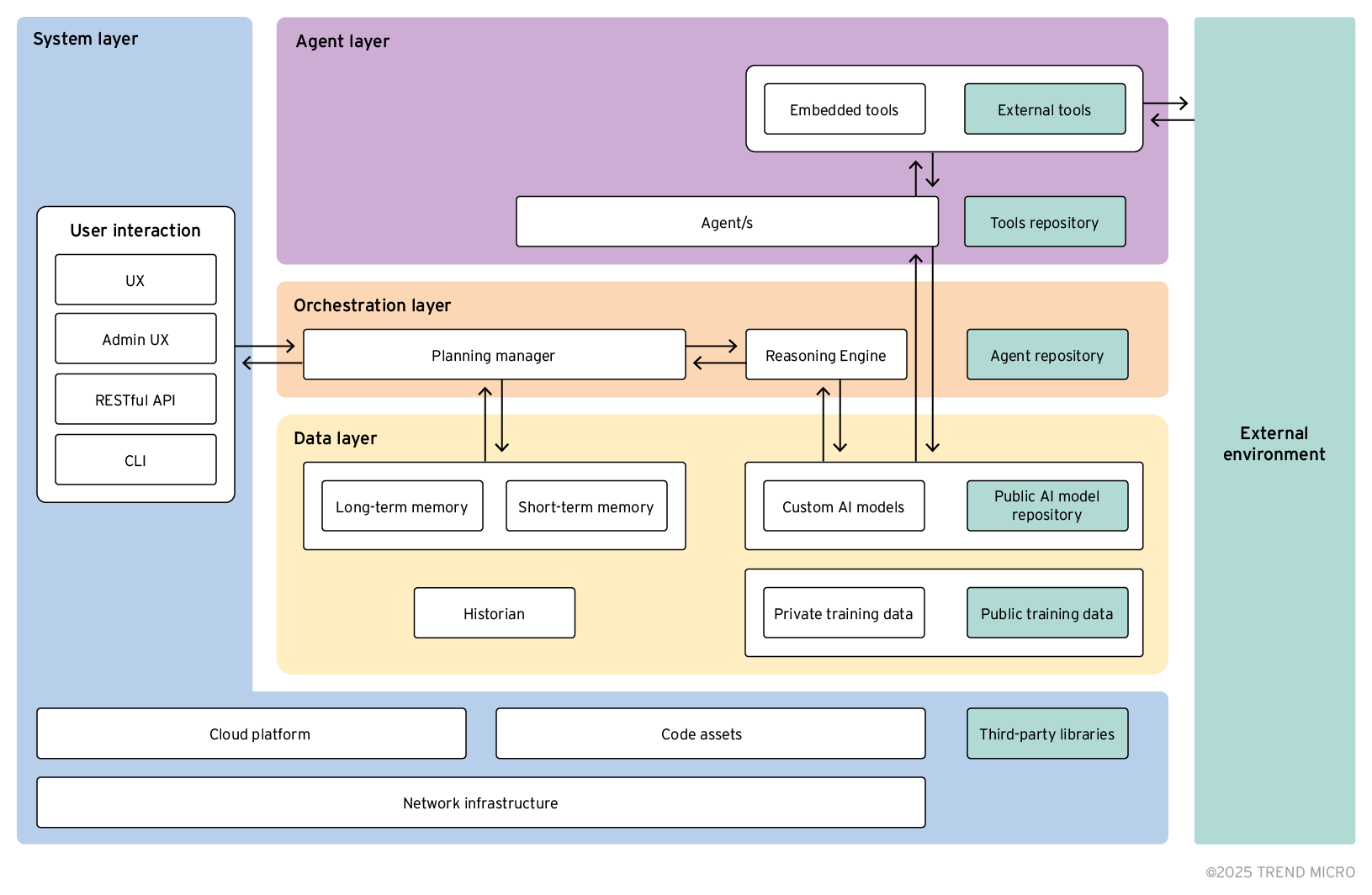
Enterprise Governance Requirements
Multi-Agent Coordination
Conflict resolution, deadlock prevention, fair resource allocation through Agent Mesh with IATP protocol and trust scoring.
Tool Governance at Scale
Hundreds of diverse APIs, databases, services with consistent access control via multi-language policy engine.
Memory/Context Governance
Sensitive data persistence, cross-session leakage prevention, appropriate retrieval with policy-controlled access.
Delegation and Spawning
Transitive trust, authority propagation, cascade control with reputation-gated delegation.
AGT Enterprise Deployment Patterns
Sidecar Proxy
Language-agnostic, transparent, independent scaling with minimal code change.
Library/SDK Integration
Minimal latency, rich context access, deep framework integration.
Kubernetes Operator
Declarative management, cluster-wide policy, GitOps compatibility.
Infrastructure Integration Strategy
Identity & Security Systems
- • SPIFFE/SPIRE federation with SVID issuance for unified identity
- • SIEM/SOAR integration with audit export and alert generation
- • Existing policy store integration (OPA, Cedar)
- • Cloud platform native identity integration
Operational Excellence
- • Prometheus/OpenTelemetry for unified observability
- • Automated compliance evidence collection
- • Chaos engineering for governance validation
- • GitOps workflow integration for policy management
Comparative Analysis
| Feature | Microsoft AGT | NVIDIA OpenShell | Galileo Agent Control | HumanLayer ACP |
|---|---|---|---|---|
| Runtime Policy Enforcement | ✅ Sub-millisecond | ❌ Isolation only | ⚠️ Mitigation | ❌ Scheduling only |
| Agent Identity/Cryptography | ✅ DIDs, Ed25519 | ❌ Container ID | ❌ Not documented | ❌ Not documented |
| Dynamic Trust Scoring | ✅ 0-1000 scale | ❌ N/A | ❌ Not documented | ❌ N/A |
| Audit/Provenance | ✅ Merkle chains | ⚠️ Structured logs | ⚠️ Event logging | ⚠️ K8s events |
| Healthcare Compliance | ✅ HIPAA, EU AI Act | ⚠️ HIPAA mentioned | ❌ Not documented | ❌ N/A |
| Production Maturity | ✅ Microsoft-backed | ⚠️ Recent release | ⚠️ Recent release | ⚠️ Alpha status |
Maturity Assessment
Licensing & Vendor Neutrality
Ecosystem Gap Analysis
Critical Missing Capabilities
Healthcare-Native Runtime Governance
Built-in clinical semantics, EHR integration, FDA-aligned controls. Impact: High implementation burden, regulatory uncertainty, safety risk.
Cross-Framework Policy Portability
Standard policy language, interchangeable enforcement. Impact: Policy fragmentation, vendor lock-in, compliance inconsistency.
Standardized Agent Identity Federation
Cross-organizational trust protocols beyond IATP. Impact: Multi-party collaboration friction, B2B governance complexity.
Standards & Interoperability Gaps
Agent-to-Agent Trust Protocols
Current: IATP (AGT proprietary). Resolution: Foundation aspiration suggests standardization potential.
Policy Language Standardization
Current: YAML/Rego/Cedar pluralism. Resolution: OPA ecosystem momentum, no convergence yet.
Audit Format Interoperability
Current: Merkle chains (AGT), structured logs (others). Resolution: No standardization activity identified.
Fragmentation Across Domains
Orchestration
Mature frameworks with governance hooks
Security
Runtime isolation + general policy
Observability
Tracing, monitoring, ML observability
Compliance
Documentation, mapping, assessment
Integration Patterns Ecosystem
LangChain, AutoGen, CrewAI"] --> C["AGT Governance Layer
Policy Enforcement + Identity"] B["Security Tools
NVIDIA OpenShell, OPA"] --> C C --> D["Observability Platforms
LangSmith, AgentOps"] C --> E["Compliance Systems
HAARF, Documentation"] D --> F["Enterprise Governance
Complete Solution"] E --> F C -.-> G["Healthcare Gap
No Native Runtime"] G -.-> H["Adaptation Required"]
The pre-2026 fragmentation is resolving in the general enterprise domain through AGT convergence, while healthcare fragmentation persists due to specialized requirements without dedicated implementation. This pattern shows how AGT serves as the central governance intelligence layer, integrating with various complementary components while the healthcare gap remains unaddressed by native solutions.
Strategic Recommendations
Q2-Q3 2026"] C --> C2["Near-term: AGT + OpenShell
Q3-Q4 2026"] C --> C3["Medium-term: Specialization
2027+"] C --> C4["Risk Mitigation: Conservative Deployment"] D --> D1["Immediate: Adopt AGT
90-day capability"] D --> D2["Near-term: Defense-in-Depth
+ OpenShell"] D --> D3["Medium-term: Community Contribution
Foundation influence"] D --> D4["Optimization: Automation & Validation"] E --> E1["AGT Foundation Transition
Vendor-neutral standard"] E --> E2["Healthcare Specialization
Clinical requirements"] E --> E3["Identity Federation Standards
Cross-organizational trust"] E --> E4["Policy Language Convergence
Interchange standards"] C1 --> F["Production Governance Capability"] C2 --> F C3 --> F C4 --> F D1 --> F D2 --> F D3 --> F D4 --> F E1 --> F E2 --> F E3 --> F E4 --> F
For Healthcare Organizations
Immediate (Q2-Q3 2026)
Evaluate AGT for foundational governance capability; assess adaptation requirements for clinical context.
Near-term (Q3-Q4 2026)
Implement AGT + OpenShell defense-in-depth; develop healthcare-specific policy libraries.
Medium-term (2027+)
Contribute to AGT healthcare specialization; evaluate emerging healthcare-native alternatives.
For General Enterprise
Immediate
Adopt AGT as primary governance layer; integrate with existing security infrastructure.
Near-term
Implement OpenShell complementary isolation; expand framework coverage.
Medium-term
Contribute to AGT community; prepare for foundation governance transition.
For Standards Bodies
Ecosystem Development
Facilitate AGT foundation transition for vendor-neutral governance standard.
Healthcare Specialization
Develop clinical AI governance requirements and validation frameworks.
Standards Development
Standardize agent identity federation and policy language convergence.
Conclusion: Existence of True Governance Layer
A true governance layer for AI-first agentic enterprises now exists in open-source form. The Microsoft Agent Governance Toolkit demonstrates that runtime policy enforcement at production scale is technically feasible, deterministic sub-millisecond governance is achievable, cryptographic audit integrity can satisfy regulatory requirements, and vendor-neutral multi-framework integration is implementable.
However, fragmentation persists in specific dimensions: healthcare-native implementation, cross-framework policy standardization, and agent identity federation. The general enterprise domain has achieved convergence, while regulated, multi-party, and specialized domains require continued development.
Healthcare organizations face the most significant implementation challenge as they must adapt general-purpose tools or await specialized implementation. This gap represents both risk (implementation uncertainty, regulatory friction) and opportunity (first-mover advantage for healthcare-native governance development).